
What To Do If You're Freaked Out About The Election
Based on a casual study of my social media feed, I can tell that many folks in my social circles experience some kind of anxiety and apprehension over US elections. This is understandable! We live in the most powerful country in the world where elections are held every 2 years that can substantially shift the balance of power in government. If you’re an adult today, you’ve probably experienced at least one federal election where the result was shocking and surprising and maybe meant more danger and risk for you and your loved ones.
When faced with the fear of the unknown, it’s natural to seek more information, try and shine a light in the shadows. In the right time and place, this can be a helpful impulse. I’m sure there are nervous flyers who might be comforted by learning about the extremely low rates of incidents on commercial flights, for instance. Unfortunately, despite all the polling and modeling and analyzing out there, there’s a hard limit to anyone’s ability to predict the individual decisions of over 100 million people. There’s a part of your brain that craves one more poll, one more tweet, one more blog post, one more hot take, one more pixel of knowledge, but eventually this kind of information intake is roughly as nourishing as drinking seawater.
If this sounds like you, then the best advice I can offer is to try to be a participant rather than an observer. Find a concrete use of your time that connects you with your community and makes a tangible improvement in the future of that community. There are many ways of getting involved, but I’m here to talk about one in particular: volunteer political canvassing, or in other words, Go knock on some doors
I first tried canvassing in 2017, and if memory serves I’ve done at least one shift door knocking or phone banking in every election since then. There’s a lot I can say about the ups and downs and lessons learned from those experiences, but today I’m gonna try and keep it quick. If you’ve never done it, I’ll give you two reasons to try canvassing: It makes a difference and You’ll feel better.
It Makes a Difference
This is a well-studied and repeatable result of political science: face-to-face contact with prospective voters is effective at increasing turnout. On the margin, get-out-the-vote operations win elections.
Alan Gerber and Donald Green have been systematically studying this question since 1998 with randomized experiments. Their work culminated in the book Get Out The Vote, first published in 2004 and updated with new research at least 3 times since then. It’s written for a mass audience, but it’s my understanding that this book is commonly assigned in college political science courses. Their results have been replicated by David Nickerson, by Bedolla and Michelson, and by many others in different places and over many years. People have many reasons for being inconsistent about voting, but for whatever reason, hearing from a real person who took the trouble to walk up to their home seems to nudge people to mail in a ballot or mark their calendars for election day.
The effect size found in these studies is often relatively small, but in a country highly polarized around 2 major parties, a few percentage points can make a huge difference in terms of outcomes. Every US election will have examples of races won by a few hundred votes or less. My favorite example: in 2022, Judy Seeberger won a state senate seat over Tom Dippel in Minnesota’s 41st district by about 300 votes. In doing so, she gave her party a one-vote majority in the chamber, allowing for a historic legislative session in Minnesota . Not every race will be so close and so consequential. In fact, very few will! But the whole point is that you don’t know ahead of time what the close races will be, and so every action that locks in a few more votes makes a small but meaningful change in the chances of victory for the candidates and causes you care about.
You’ll Feel Better
Stress and anxiety take many forms in life and people are complicated. Experts in human psychology will be the first to tell you that many important findings in the field are nuanced and full of caveats. But it’s my understanding that perceived control is pretty fundamental to the nature of stress and anxiety. Taking some sort of concrete action, however small, towards alleviating a stressful situation can have an outsized impact on our emotional well-being. Conversely, our stressors amplify to the extent they make us feel powerless to change our situation. Physical activity and social support are two additional factors that help to alleviate the impact of stress.
Take that into consideration when I tell you what it’s like to do a shift door knocking. You’ll assemble in a small or large group for a brief training. You’ll be among like-minded people who are probably going through some of the same anxieties and decided that day to spend some time trying to help a cause they care about. You’ll get designated a little corner of a neighborhood and spend a few hours walking around outside. You’ll ask people questions and record their answers. You’ll share info with your neighbors about how and when they can exercise their right to vote. Some conversations will be awkward, but in my experience it’s very rare for someone to be outright rude. Much more often, people will thank you for taking the time to do something they see as valuable and important. Quite a lot of the time, you’ll knock on a door and nobody will be home so you’ll move on to the next one. Maybe the weather will be pleasant, and maybe you’ll get a chance to visit a part of town you’ve never been to before.
At the end of the day, you’ll likely have reached at least one person who wasn’t sure how to vote or who to vote for, and who sincerely appreciated a thoughtful person coming to the door ready to listen and connect them to help and information. True, you’ll never really know whether that person made it to the polls or voted for your preferred candidate, but you’ll know that you tried, and perhaps you both will reflect on the beautiful and fragile notion that civilization is something that you and your neighbors build together.
How to get started
In Minnesota, the DFL is coordinating a widespread Get Out The Vote campaign until the election with events every day all across the state. The place to start is dfl.org/gotv.
You may know someone who has done this kind of canvassing before, and that person would probably love to hear from you, help you learn more, and maybe even go with you for your first shift. If we’ve ever spoken for 2 minutes in real life, then Hi! I’m happy to be your personal volunteering concierge.
You can also look up who represents you and who is on the ballot this year. The website of every candidate worth your time will have a big prominent button saying something like “Volunteer” that will lead to a form or an email address, usually connected to someone excited to reply with places and times you can help out.
So here we come to the last sentence where I try to be inspirational and everything I type feels impossibly corny. If you’re reading this today, you have 10 weeknights and 4 weekend days before election day - pick one, then get off the bench and take a shot. Take your inspiration about the importance of small efforts to a common cause from whatever ancient tradition you choose, and I’ll meet you out there.

Shout out to this little guy - probably a chipping sparrow? - for coming to visit right after I unboxed my new fancy zoom lens. Very considerate of you to help justify my new toy


My current skill level at architectural photography: I can, with some amount of painstaking editing, sometimes make a picture that looks like the thing in the picture

A Quick Little Vacation Story
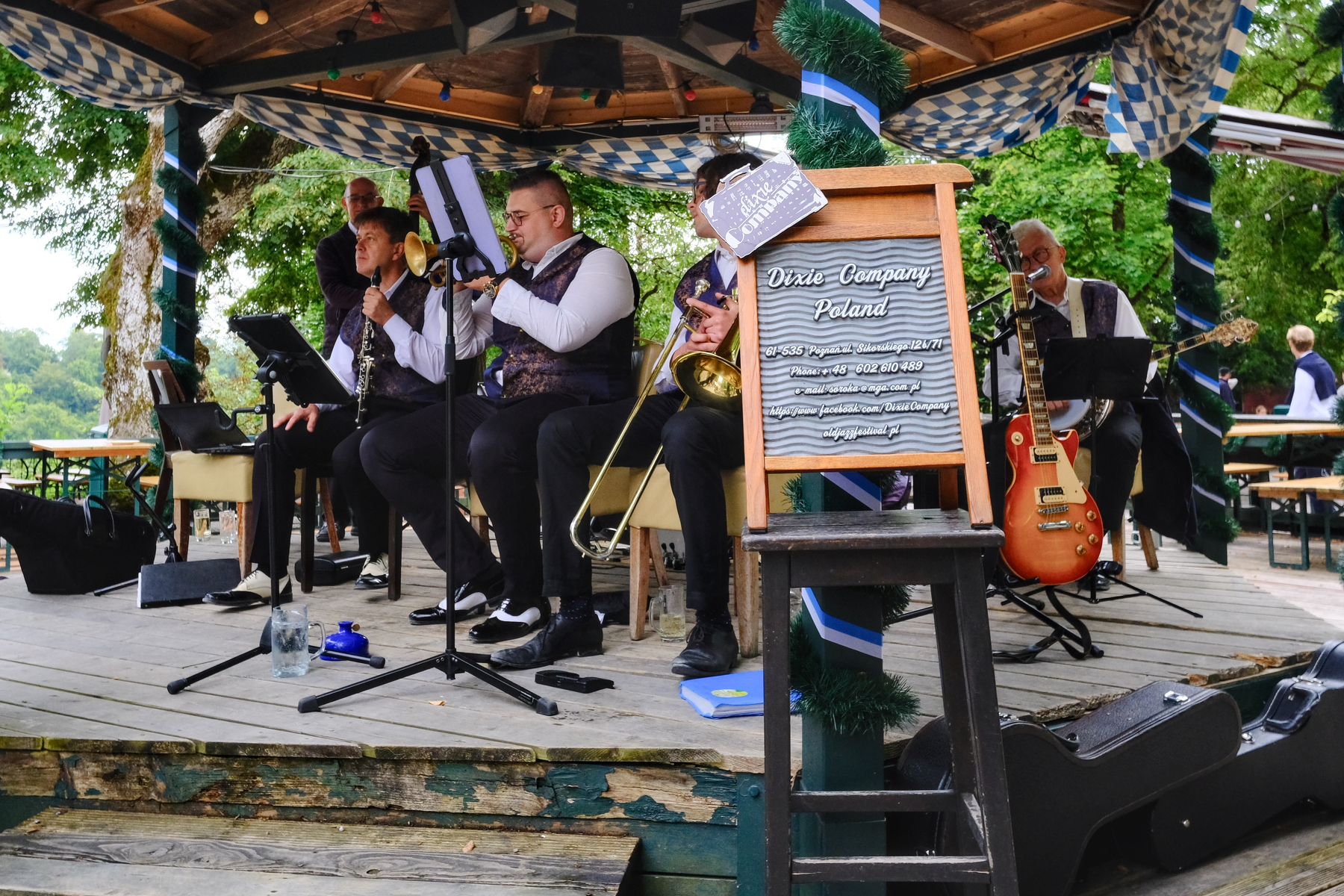
Testing out how longer posts in micro.blog look while cross-posting to bluesky and mastodon, so here’s an unremarkable story about a pleasant day I had on vacation. If you find yourself on a self-guided tour of the bike trails along the Isar just south of Munich – and I mean, who doesn’t at some point in their life? – I highly recommend following the signs to Waldwirtschaft, a lovely biergarten right off the bike trail. I had a beer and a currywurst and listened to a trad jazz group from Poland, possibly one of the most pleasant afternoons I’ve ever stumbled into.

Some Professional News - Plural is Now Part of SAI360
In October 2021 I joined a small startup that was building bill tracking software for Congress and state legislatures. On December 1st, we announced that SAI360 has acquired Plural, ending a four-year chapter of my professional life and starting a new one as Senior Director, Engineering at SAI360. So far everyone I’ve worked with at SAI360 has been talented and thoughtful, and it looks like we’ll have interesting and valuable work to do together. I’m also happy to report that we’re keeping the Plural product operating and the team intact.
It would be negligent not to mention that there were many people who contributed to Plural’s growth that were not employees at the time of acquisition (or ever). We benefited from the work of advisors, contributors to the Open States project, contractors, and employees who left the company for whatever reason. If you’re one of those people, please know that I appreciate your contribution, large or small, and the chance to work with you, even if briefly. Thank you! One of the great joys in life is to do difficult but meaningful work with talented and kind people, and Plural has given me many such opportunities over the years.
The tradeoffs of working in a startup vs. a more mature company are well documented out in the world, but if I have any modicum of useful analysis or advice to add, now feels like my best chance. At a high level: expect more agency but less predictability, many chances to grow in responsibility but probably not a short-term-maximal salary. Startups can be stressful, but so can big company jobs - sometimes life is about picking your flavor of hassle rather than avoiding it entirely
For those looking for a comprehensive guide, the book on startup engineering that I found most useful personally was Will Larson’s An Elegant Puzzle. I’d recommend it with the caveat that Larson’s advice is colored by his experience at very successful tech companies in hyper-growth mode, so readers should season to taste.
One practice for startup employees that I’ve found challenging and important is being really honest and disciplined about time scales. Working at a 5-50 person company means that there is probably some project that you can complete this week to materially affect the success of the business, and somewhere around 75-95% of your effort should be on that thing. On the other hand, it’s also important to do some amount of planning for the world 3-9 months ahead and make calculated investments that will pay off in that timeframe. When I tried to predict what challenges the team would face more than a year in the future, I was often pretty far off, so I think it makes sense to cut off your planning horizon before then (or, perhaps, be better than me at predicting the future!). I don’t think the ability to switch contexts crisply between an immediate challenge and a hazy vision of the future comes naturally to anyone, but I think with practice and intention I’ve gotten a little better at it.
Another idea that I keep coming back to, something between a personal productivity strategy and an emotional koan: There Will Be A Next Thing. At any given moment, The Thing might be: a looming deadline, a complex disagreement, an ill-defined but important project, an uncertainty about the future, a negative change in the world outside anyone’s control. The Thing will distract you, annoy you, get under your skin, stick in your craw. You will be tempted to think longingly towards the post-Thing world ahead: a peaceful time where, freed from the psychic pressure of The Thing, you can do your best work and think your best thoughts and everything will be “normal”. In those moments, remember: There Will Be A Next Thing.
Maybe this is just literal wisdom of the ancients restated, but at my best I can draw two useful behaviors from this idea in my working life:
- While the team is battling the current Thing, it’s tempting to set aside valuable-but-not-so-urgent work until “later”. The difficult truth is that later (when it will feel easy to clean up old problems) is unlikely to come. This realization should focus our priorities: either the problem is important enough to fix now, or we look it in the face and accept the brokenness, knowing that There Will Be A Next Thing
- At the same time, the Next Thing means that the window for celebrating accomplishments can be fleeting. Seize it! Tell your teammates when they do great work, thank your coworkers for handling tedious-but-necessary tasks, brag about your completed projects to the slack channel and/or the world. And then take a deep breath, a sip of a warm beverage, and prepare to confront the Next Thing.
The Warmth of Other Suns - Isabel Wilkerson
The subtitle is “The Epic Story of America’s Great Migration”, which feels appropriate. This book is a survey of 60-ish years of American history, as well as a complete biography of three Black Americans who are emblematic of various facets of the era. Wilkerson bites off a lot, but manages to chew it at least to my satisfaction. There are a lot of facts here that I “knew” about the Jim Crow south in the sense of covering it for a bit in high school or reading a Wikipedia page, but hearing it from those who lived it gave me a valuable depth of understanding. Our three protagonists are drawn with all their flaws and challenges, but with the kindness and respect that comes from many hours of deep research and careful listening. Having lived in St Paul and spent a lot of time in Chicago, Milwaukee, New York, Los Angeles, etc., this history also enlightens the present of many great and complicated American cities.
George, Ida Mae, and Robert all have some great anecdotes and various brushes with fame and history, but being such a cool doctor that Ray Charles drops your name in a tune is pretty fuckin' boss. An honest description of a day of truly hard manual labor offers me the useful reflection that I’ve never had even a single day of that kind of work in my life. Of course there are many parts of the Jim Crow era that feel shameful and deplorable, but good god, the sheer waste of human potential - how many potential healers, inventors, visionaries, leaders, etc. are lost to humanity because they are born on the wrong side of a caste system? One hopes that even if slow, kicking, and screaming, we eventually learn from our mistakes
Burn After Reading (2008)
Watched Nov 29, 2025. This Coen Brothers comedy of errors doesn’t get as much love as Fargo or The Big Lebowski, and maybe deservedly so, but I think it’s sharp, clever, and the high points still make me absolutely cackle. More explicitly politics-adjacent than other Coen joints, but I think it pairs well with interpretations of Lebowski as an allegory to the Gulf War. What if those in power are just as prone to petty, selfish squabbles as everyone else, and what happens to the innocent ones caught in the middle? (Pour one out for Richard Jenkins' pining gym manager)
Spouse made an excellent observation that it must have been fun for Joel to write a movie where his wife (the delightful Frances McDormand!) gets to bone down with George Clooney. Funny to see CD-Rs and Motorola RAZRs appropriately presented as relevant technology at probably the last possible moment in history you could do so. Also spot the poster of Vladimir Putin on the wall, then the relatively-new democratically-elected leader of Russia.
There’s probably an actual Drama School term for this, but the way that Brad Pitt plays a serious cool guy with deliberate, calculated movements and a hapless goofball by constantly fidgeting and darting his eyes around the room always makes me smile. I first saw this around the time that I was first getting into bike commuting so his delivery of “You think that’s a Schwinn!” remains very special to me.
Rental Family (2025)
A lovely and thoughtful story about the ways that everyone around us is burdened by weight we’ll never see. I have many fond memories of Brendan Fraser from my childhood, though not as specific as some of my peers, and it’s delightful to see him come back in very different roles but with the same kindness and charm. Didn’t go in the places I expected but I loved every little emotional turn. It’s a premise with inherent awkwardness but I think the movie is stronger for treating the clients of the rental family service with respect rather than just sneering at them.
Also, someone needs to bring me to Japan soon for riding trains and visiting charming little bars.

